 MyLifeLedger
How this calculator works
Your retirement (financial independence) number is your yearly spending divided by your withdrawal rate. At a 4% withdrawal rate that is 25 times your yearly spending.
To estimate the time, the calculator goes month by month. Each month your balance grows by a monthly return, (1 + return/100) raised to the 1/12 power minus 1, and then your monthly contribution is added. It stops when the balance reaches your number, and shows 100+ years if that would take longer than 100 years.
Use a return after inflation, because your spending is in today’s dollars. A 7% average return minus about 2 to 3% inflation is roughly 4 to 5%.
Example
Spending $40,000 a year at a 4% withdrawal rate gives a number of $1,000,000.
Starting with $100,000 invested, adding $1,500 a month and earning 5% after inflation, it takes about 264 months, or 22.0 years.
Tips
- Your spending matters twice. It sets the number you need and the amount you must save.
- Try different contributions. A small increase each month can shave years off the result.
- Returns are not guaranteed, so revisit the numbers once a year.
Frequently asked questions
What is the 4% rule?
It is a rule of thumb that you can withdraw about 4% of your starting portfolio each year. It is a guideline, not a guarantee.
Why use a return after inflation?
So the result stays in today’s dollars and matches your current spending.
Does this include Social Security or a pension?
No. If you expect other income, lower your yearly spending by that amount to estimate your gap.
What is FI?
FI means financial independence: having enough invested that you no longer need a paycheck to cover your spending.
Related calculators
Related tools
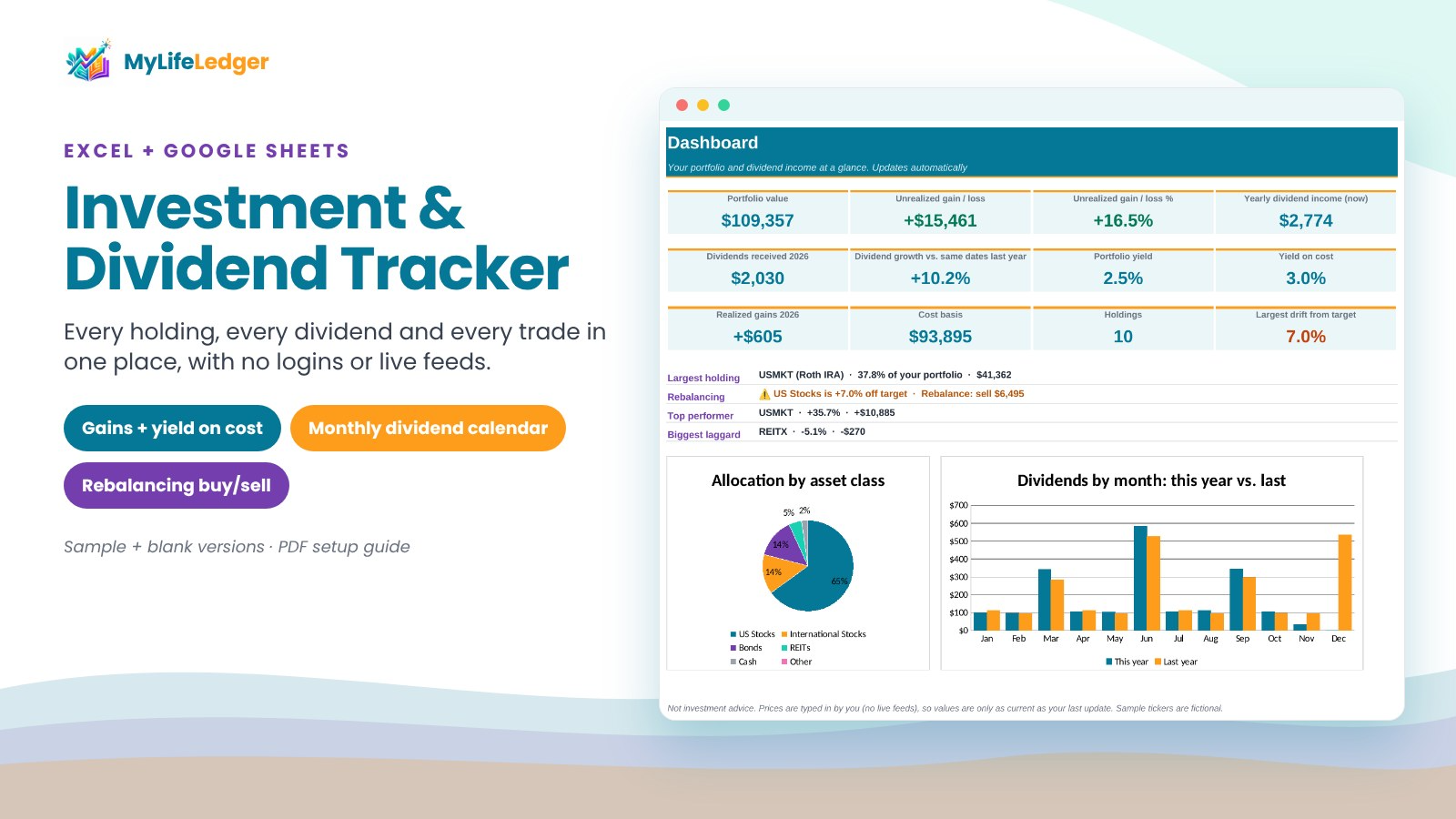
Investment & Dividend Tracker
Holdings, dividends and rebalancing in one sheet
$9.99View tool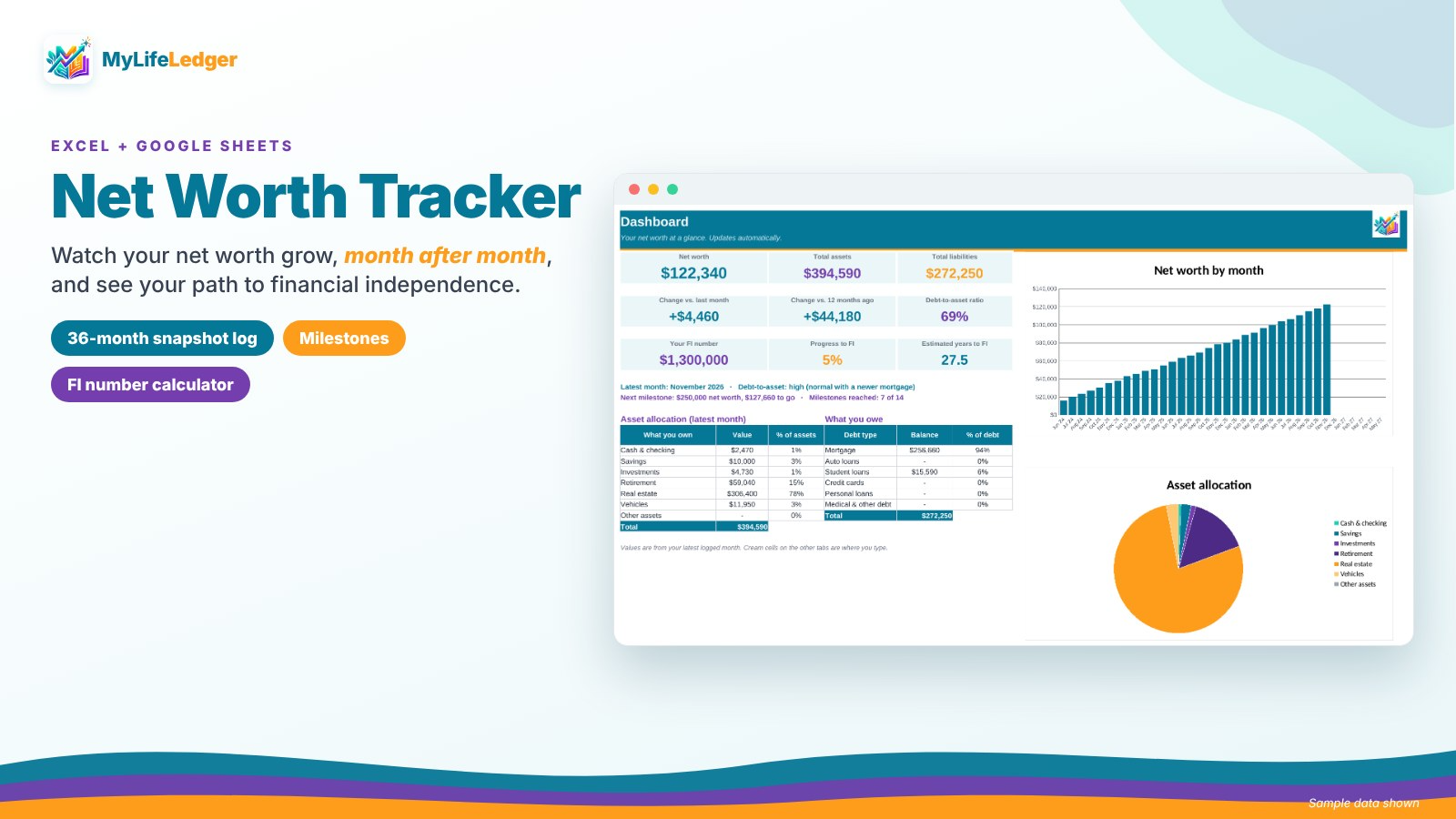
Net Worth Tracker
Watch your net worth grow
$8.99View tool
Estimates for education only, not financial advice.